If you have compared ozone-based blood therapies online, you have probably wondered about the difference between EBOO and EBO2. The honest answer surprises some patients. In most cases, the two terms describe the same therapy. EBOO stands for extracorporeal blood oxygenation and ozonation, and EBO2, sometimes written EBO₂, is simply another name for it, with the 2 pointing to the oxygen involved. There is no universal standard that separates them, which is why the real question is less about the label and more about what a given treatment actually includes.
I am Dr. Alonso Martin, and at my Miami Beach practice, BODYWELLE, I offer this therapy and field a lot of questions about what to call it. Patients often arrive confused by competing marketing, so I find it more useful to explain what the treatment does and what to look for than to focus on the name.

Key Takeaways
- EBOO and EBO2 most often refer to the same therapy, with the difference being terminology.
- No official standard separates the two names, so usage varies from clinic to clinic.
- What matters more than the label is the setup, including blood volume, filtration, and UV light.
- BODYWELLE’s EBOO already includes the high-volume, filtered, UV-enhanced approach others may call EBO2.
- Choosing a provider comes down to the quality of the treatment and its oversight, not the name.
Are EBOO and EBO2 the Same?
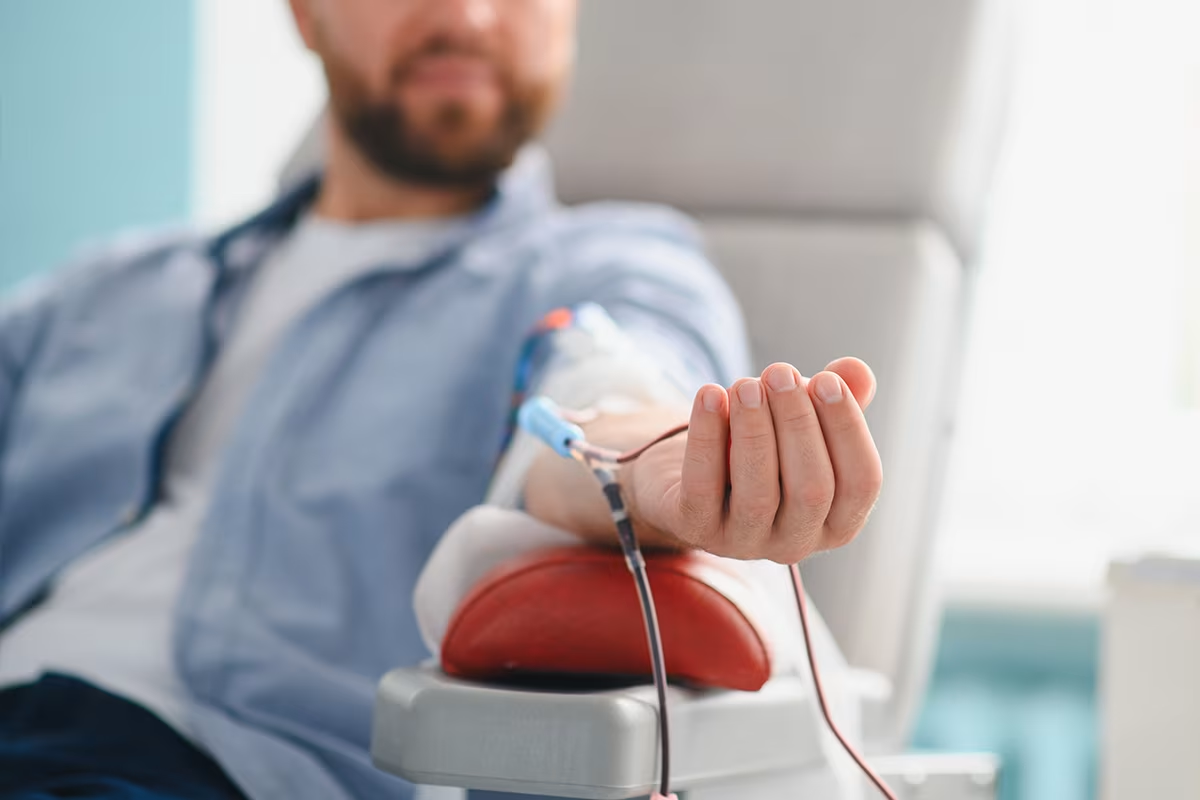
In the great majority of cases, yes. Both EBOO and EBO2 refer to extracorporeal blood oxygenation and ozonation, a therapy that circulates your blood outside the body, treats it with medical ozone and oxygen, and returns it. The 2 in EBO2 simply refers to oxygen, or O2. Some clinics adopt one name, some the other, and a few use EBO2 to market what they present as a more advanced setup. Because no medical authority defines the terms, that distinction is not consistent from one place to the next. For practical purposes, when you see EBOO or EBO2, you are looking at the same category of therapy.
Key Differences Patients Should Understand
Beyond the names, which come down to terminology, what actually varies from one treatment to the next is how the therapy is set up. These are the features worth considering.
What the Treatment Includes
A complete EBOO treatment is more than ozone alone. The fuller versions combine three elements in a single session: blood filtration, ozonation and oxygenation, and ultraviolet light therapy. Simpler ozone methods may use only one of these. At BODYWELLE, our EBOO includes all three, which is the same comprehensive setup some clinics choose to label EBO2.
How Much Blood Is Processed
Volume is one real, measurable variable. Basic ozone methods treat a small sample of blood, while a full extracorporeal session processes far more. Our EBOO treatment circulates approximately 1 liter of blood over a session, a meaningful portion of your total volume, which is what allows it to work systemically rather than in one spot.
Whether Filtration and UV Light Are Included
Not every ozone therapy filters the blood or adds ultraviolet light, and these are often the features that separate a basic treatment from a thorough one. BODYWELLE’s EBOO includes a medical-grade filtration step and full-spectrum UV, covering UVA, UVB, and UVC wavelengths, alongside the ozone and oxygen. If you are comparing providers, this is worth confirming directly, regardless of whether they call the therapy EBOO or EBO2.
Who Supervises the Treatment
The most important variable has nothing to do with the name. Because the therapy involves accessing and circulating your blood, who oversees it matters a great deal. At BODYWELLE, EBOO is delivered in a physician-led, medically supervised setting, which is the standard I would tell anyone to look for before choosing a provider.
Start Your Journey to Success, Don’t Wait Any Longer!
Join our satisfied clients who’ve experienced safe, effective treatments.
How the Treatment Fits Your Wellness Goals
Whatever it is called, this therapy is best understood as a wellness and longevity tool rather than a treatment for a diagnosed disease. The aim is to support the body’s own systems, including circulation, oxygen delivery, immune function, and natural detoxification, as part of a broader health strategy. It is not intended to diagnose, treat, or cure a medical condition, and I am always clear with patients about that. Where EBOO fits depends on your goals, which is something we map out together.
Why Patients Consider EBOO or EBO2
Patients generally consider EBOO or EBO2 for the same reasons. Most are relatively healthy and focused on optimization, drawn to the potential benefits for energy, recovery, immune resilience, and longevity, or looking for a deeper, blood-level layer of support than supplements and IV drips provide. Others are simply drawn to the idea of a thorough reset for the blood. The motivation is rarely the acronym. It is the goal behind it.
Is EBOO Therapy Right for You?
EBOO may be a good fit if you are generally healthy and want to support your wellness proactively. It tends to suit people who feel they have optimized the basics, sleep, nutrition, and movement, and want to go a layer deeper. It is not right for everyone, though. Certain conditions, such as bleeding disorders or G6PD deficiency, can make ozone-based therapy inappropriate, which is one reason a medical evaluation comes first. The honest way to find out is a consultation.

What Makes BODYWELLE’s EBOO Approach Different?
At BODYWELLE, I focus less on what we call the therapy and more on how it is delivered. EBOO here is part of a physician-led longevity program, using medical-grade equipment with filtration, ozone and oxygen, and full-spectrum UV in every session, and it begins with a consultation and a review of your health. I also place it in context as one option within an integrative approach that may include IV therapy and other strategies chosen around your goals.
Schedule EBOO Treatment in Miami Beach, FL
If you are weighing EBOO or EBO2 and want a clear, honest assessment, the next step is a conversation. Schedule a consultation at BODYWELLE in Miami Beach, and we can review your health and goals and decide whether EBOO is a good fit.