Quick answer: Iron pills are the usual first step for low iron because they are inexpensive, easy to take, and effective for most people. An iron infusion delivers iron directly into the bloodstream and may be considered when pills are not tolerated, are not raising iron levels, or cannot be absorbed properly. Bloodwork comes first either way, because the right choice depends on how low your iron is and why.
Low iron is one of the most common reasons people feel tired in a way that sleep does not fix. It builds slowly, and the symptoms are easy to explain away as stress or a busy calendar. By the time someone mentions it to me, they have often already tried iron pills and either felt no different or felt worse.
I am Dr. Alonso Martin, founder of BODYWELLE in Miami Beach, where I practice longevity, functional, and integrative medicine. During my family medicine residency I treated a wide range of patients with metabolic and nutritional issues, and iron came up frequently. It is one of the few problems in wellness medicine where a simple blood test can give you a clear answer.

What to Know Before Choosing Iron Pills or an Infusion
- Iron pills are the usual starting point because they work well for most people and cost very little.
- An iron infusion may be considered when pills upset your stomach, are not working, or cannot be absorbed.
- Infusions raise iron levels faster than pills and tend to cause fewer digestive side effects.
- Bloodwork is needed before an infusion to confirm low iron and determine the correct dose.
- Finding out why your iron is low matters as much as replacing it.
- What to Know Before Choosing Iron Pills or an Infusion
- What is the Difference Between Iron Pills and Iron Infusions?
- When Are Iron Pills Usually Recommended?
- When Might an Iron Infusion Be Considered?
- Why Do Iron Pills Sometimes Not Work?
- How Do Iron Pills and Infusions Compare?
- What Are the Side Effects of Iron Pills and Iron Infusions?
- How Do Doctors Decide Between Oral and IV Iron?
- Do You Need Bloodwork Before an Iron Infusion?
- Why Is Your Iron Low in the First Place?
- What to Expect From an Iron Infusion
- When Should Low Iron Be Evaluated Further?
- Iron Infusion Therapy in Miami Beach, FL
- Frequently Asked Questions About Iron Infusions
What is the Difference Between Iron Pills and Iron Infusions?

Iron pills are taken by mouth and travel through the digestive tract, where a portion of the iron is absorbed through the intestinal wall and the rest passes through. They are available over the counter and cost very little.
An iron infusion delivers iron into a vein, which skips the digestive system entirely. That means the amount you receive is the amount your body gets, and it can be given in far larger doses at one time. It also has to be done in a medical setting with a trained provider present.
At BODYWELLE, Iron IV is part of our IV therapy offerings and is given only after bloodwork confirms that iron is the problem.
When Are Iron Pills Usually Recommended?
For most people with mild to moderate low iron who can tolerate and absorb them, pills are the sensible first choice. They are inexpensive, easy to get, and there is good evidence behind them.
According to the AGA Clinical Practice Update on Management of Iron Deficiency Anemia, no single oral iron formulation has an advantage over another, and ferrous sulfate is preferred because it is the least expensive. The same guidance advises taking oral iron once a day at most, notes that every-other-day dosing may be better tolerated with similar absorption, and recommends taking vitamin C alongside it to improve uptake.
How severe the deficiency is and what is causing it both shape the decision. Someone who is mildly low from a restricted diet is in a different situation from someone losing iron faster than they can replace it.
When Might an Iron Infusion Be Considered?
The AGA update names three situations where intravenous iron is appropriate. The first is when a patient cannot tolerate oral iron. The second is when ferritin does not improve after a trial of pills. The third is when the patient has a condition that makes absorption unlikely in the first place.
A 2025 review in Advances in Experimental Medicine and Biology adds a fourth, which is when iron stores need to be replaced quickly, such as before a planned surgery.
None of this is a decision to make on your own. Intravenous iron should follow a clinical evaluation, not a hunch about why you are tired.
Why Do Iron Pills Sometimes Not Work?
Oral iron asks a lot of your digestive system. Effective repletion requires taking up to 200 mg of elemental iron daily for three to twelve weeks, and only a small fraction of that is actually absorbed.
The rest stays in the intestine, which is exactly why pills cause constipation, nausea, and stomach upset in so many people. Those side effects are the most common reason patients stop taking them before the course is finished.
Absorption itself can also be the obstacle. Conditions affecting the gut, previous bariatric surgery, and ongoing inflammation can all limit how much iron crosses from the intestine into the bloodstream, no matter how faithfully the pills are taken.
Start Your Journey to Success, Don’t Wait Any Longer!
Join our satisfied clients who’ve experienced safe, effective treatments.
How Do Iron Pills and Infusions Compare?
Absorption
Pills depend on your gut to do the work, and only a small share of each dose gets through. An infusion bypasses that step, so absorption is not a variable.
Speed of Iron Replacement
A 2025 systematic review and meta-analysis in Biomedical Reports pooled 31 studies comparing the two approaches and found that intravenous iron consistently corrected hemoglobin faster than oral iron. The advantage was clearest in patients with chronic kidney disease, inflammatory bowel disease, cancer-related anemia, and general iron deficiency anemia. For postoperative anemia and restless legs syndrome, the two approaches performed similarly.
Convenience
Pills win on access and cost, since you can buy them anywhere and take them at home. Infusions require an appointment, a clinical setting, and a higher cost, though a full course of iron can often be delivered in far fewer sessions than months of daily pills.

What Are the Side Effects of Iron Pills and Iron Infusions?
With pills, the side effects are digestive. Constipation, nausea, stomach discomfort, and dark stools are all common, and they come from unabsorbed iron sitting in the intestine rather than from anything going wrong.
With infusions, the profile is different. The meta-analysis found consistently fewer gastrointestinal side effects with intravenous iron. Infusion reactions can happen, though the AGA update reports that true allergy is very rare, that most reactions are a different process that can look similar, and that mild reactions occur in roughly 1 in 200 infusions while major ones occur in roughly 1 in 200,000. A 2026 consensus statement from the Network for the Advancement of Patient Blood Management, Haemostasis and Thrombosis, published in the British Journal of Anaesthesia, reviews these events in detail and notes that fear of them causes intravenous iron to be underused.
Low phosphate levels are also worth monitoring after infusion with certain formulations, which is one more reason this is done under medical supervision rather than casually.
How Do Doctors Decide Between Oral and IV Iron?
I start with the labs and the cause, then look at whether pills have had a fair trial. The AGA update notes that in a patient taking oral iron consistently, hemoglobin should rise by about 1 g/dL within two weeks, with ferritin climbing within a month. If neither happens, continuing the same approach is unlikely to change anything.
Tolerance matters just as much. A prescription that makes someone feel sick is a prescription they will stop taking, and a partially completed course does not fix a deficiency.
Beyond that, the meta-analysis found that neither treatment duration nor dosage predicted outcomes as strongly as patient-specific factors did. The right answer depends on the individual more than on any general rule.
Do You Need Bloodwork Before an Iron Infusion?
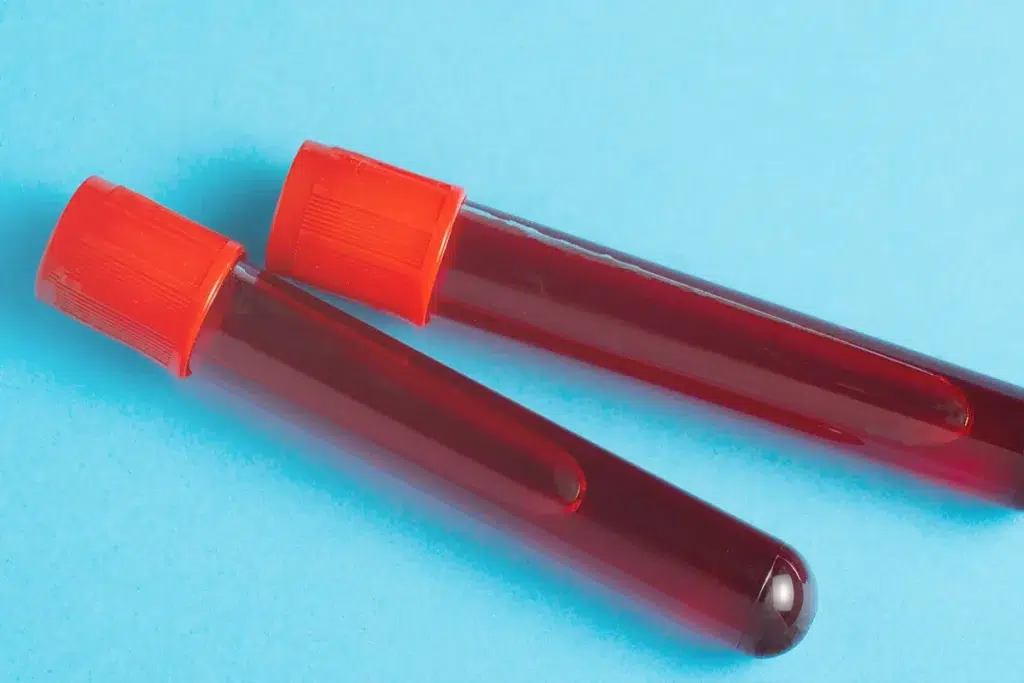
Yes. At BODYWELLE, bloodwork is required before an Iron IV to confirm that iron is genuinely low and to determine the appropriate dose.
The panel typically includes hemoglobin, which shows whether anemia is present, and ferritin, which reflects how much iron your body has in storage. Additional iron studies help clarify the picture when the first two do not agree.
Skipping this step is a real problem, not a formality. Fatigue has many causes. Giving iron to someone who does not need it carries risk rather than benefit, and dosing depends on how large the deficit actually is.
Why Is Your Iron Low in the First Place?
Low iron generally comes down to blood loss, inadequate intake, poor absorption, or some combination of the three. Heavy menstrual periods are among the most common causes in women of reproductive age. Restricted or plant-based diets can contribute, as can pregnancy.
Absorption problems make up much of the rest. Celiac disease, inflammatory bowel disease, and prior bariatric surgery all interfere with how much iron the intestine can take up.
Blood loss from the digestive tract is a different category and needs investigation rather than supplementation. Replacing iron without identifying an ongoing source of loss treats the number and ignores the reason behind it.
What to Expect From an Iron Infusion
Before the Infusion
Your visit begins with a consultation and a review of your labs, symptoms, medical history, and current medications. I confirm that iron deficiency is present, determine the dose, and discuss whether an infusion or a course of pills makes more sense for your situation.
During the Infusion
The infusion is given in-office while you are seated comfortably, and you are monitored throughout. IV sessions at our practice generally run 30 to 60 minutes. Most patients read or rest, and the process itself is uneventful for the large majority of people.
After the Infusion
There is no downtime, and patients typically return to normal activity the same day. Iron IV at BODYWELLE is offered in a series of five, and follow-up labs confirm whether your levels have responded. Improvement in energy tends to develop over weeks rather than immediately, since your body needs time to use the iron it has received.
When Should Low Iron Be Evaluated Further?
Repeated rounds of supplementation are not the answer when iron keeps dropping. If your levels fall again after treatment, or symptoms persist despite normal-looking labs, the cause deserves a closer look.
Certain findings warrant prompt evaluation rather than another bottle of pills. These include blood in the stool, black or tarry stools, unexplained weight loss, unusually heavy menstrual bleeding, or iron deficiency in a man or a postmenopausal woman, where blood loss from the digestive tract is a more likely explanation.
Iron deficiency is a finding, not a diagnosis. Sometimes it points to something that needs its own treatment.
Iron Infusion Therapy in Miami Beach, FL
At BODYWELLE, Iron IV is physician-led and based on labs rather than symptoms alone. If your bloodwork shows that pills are the better route, that is what I will recommend.
To find out which option fits your situation, schedule a consultation at BODYWELLE in Miami Beach.