If you have been researching blood-based therapies, you have probably run into the question of EBOO vs plasmapheresis. The two are often mentioned together because both treat your blood outside the body, but they sit in very different categories of care. EBOO is a wellness and longevity therapy that filters, oxygenates, and ozonates the blood. Plasmapheresis is an established medical procedure that removes and replaces blood plasma to treat diagnosed conditions. Understanding that distinction is the key to knowing which, if either, applies to you.
I am Dr. Alonso Martin, a physician focused on longevity and integrative medicine at BODYWELLE in Miami Beach, where I offer EBOO. My goal here is to explain clearly how each therapy works, because the two are often confused even though they serve very different purposes.
Key Takeaways
- EBOO and plasmapheresis both treat blood outside the body, but for very different reasons.
- EBOO is a wellness and longevity therapy that filters, oxygenates, and ozonates the blood.
- Plasmapheresis is a medical procedure that removes and replaces plasma to treat diagnosed conditions.
- EBOO is generally used as an ongoing or maintenance therapy rather than a one-time fix.
- The right choice depends on whether your goal is wellness support or treatment of a specific illness.
Why These Treatments Are Often Compared

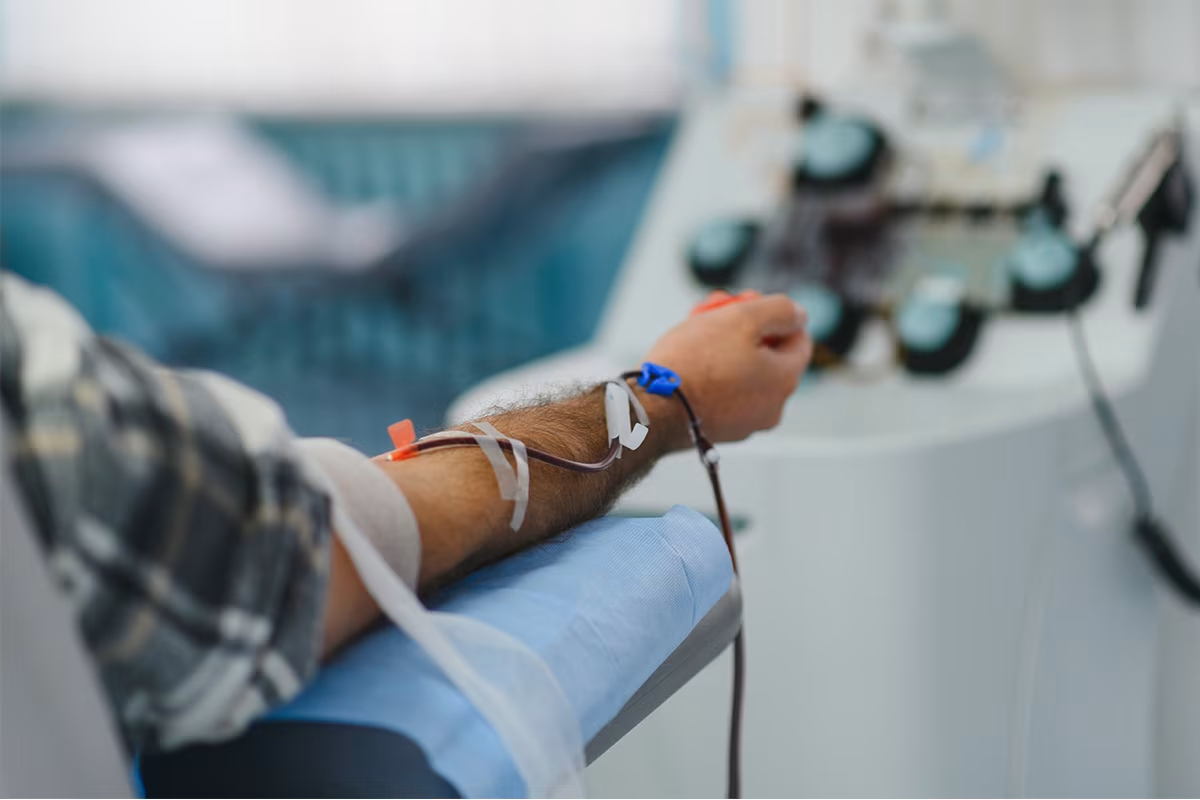
EBOO and plasmapheresis get grouped together for an understandable reason. Both are extracorporeal therapies, which simply means your blood is processed outside the body through a machine and then returned. Both involve drawing blood, running it through a filtration or separation system, and circulating it back. On the surface, they can look like variations on the same idea.
The similarity ends there. One is built to support general wellness and the body’s own systems. The other is a targeted medical treatment for serious, diagnosed illness. Comparing them as though you would choose between them for the same purpose is where most of the online confusion comes from.
How EBOO Therapy Works
EBOO stands for extracorporeal blood oxygenation and ozonation. In an EBOO session, your blood is drawn through an IV and passed continuously through a medical-grade filtration system. As it circulates, it is enriched with a measured blend of ozone and oxygen and exposed to ultraviolet light, then returned to your bloodstream. A single session can process 1 liter of blood over roughly an hour.
The aim is not to remove any one component of your blood but to support its overall quality. By improving oxygenation, supporting blood filtration, and exposing the body to a controlled, low level of oxidative stress through ozone, EBOO is designed to prompt the body’s own antioxidant and cellular repair responses, a principle sometimes called hormesis. In practical terms, it is meant to support circulation, immune function, and the body’s natural handling of toxins rather than to treat a named disease. EBOO is sometimes called ozone dialysis, though it is not kidney dialysis.
How Plasmapheresis Works
Plasmapheresis, also called therapeutic plasma exchange, works on a completely different principle. Rather than treating whole blood, it separates the blood into its parts. Blood is drawn and run through an apheresis machine that divides it into blood cells and plasma, the liquid portion that carries proteins and antibodies.
In therapeutic plasma exchange, the plasma, which may contain harmful antibodies or disease-related proteins, is removed and discarded, then replaced with a substitute such as albumin or donor plasma. The blood cells are returned to you along with the replacement fluid. This is an extracorporeal blood purification procedure, prescribed by physicians and performed in hospital-grade settings for specific medical conditions rather than for general wellness.
Start Your Journey to Success, Don’t Wait Any Longer!
Join our satisfied clients who’ve experienced safe, effective treatments.
The Main Difference: Wellness Support vs Medical Plasma Exchange
The cleanest way to understand EBOO vs plasmapheresis is by purpose. EBOO is a wellness and longevity therapy. Plasmapheresis is a medical treatment. That single distinction drives everything else, from who is a candidate to where each one is performed.
Treatment Goals
EBOO aims to support the systems you already have, including circulation, oxygen delivery, immune resilience, and the body’s natural detoxification, as part of proactive wellness. Plasmapheresis has a defined clinical target: the removal of specific disease-causing substances, such as antibodies, from the plasma in certain autoimmune conditions. One supports general health. The other treats diagnosed illness.
Safety and Medical Supervision
Both require medical oversight, but the level and the setting differ. EBOO is delivered in an outpatient wellness clinic under physician supervision, with side effects that are usually mild and short-lived. Plasmapheresis is more involved, often requires a central line, and carries risks such as low calcium, low blood pressure, or reactions to the replacement fluid, which is why it is carried out in a hospital or specialized medical facility.
Who May Be a Candidate for Each Procedure
The candidates for each procedure are almost entirely different groups.
EBOO tends to suit generally healthy adults who want to support recovery, energy, immune function, and longevity, or who feel the basics of wellness have taken them as far as they can. It is a proactive, optimization-minded choice.
Plasmapheresis is for people with a diagnosed medical condition that calls for it, often serious autoimmune, neurologic, or blood disorders, where removing harmful components from the plasma is part of the treatment plan. That decision is made by a treating specialist, not chosen as a wellness upgrade.
What to Expect From Results
Because the two therapies do different things, their results are measured differently. With EBOO, the goal is gradual support of how you feel and function, energy, recovery, and overall wellness, often as part of an ongoing longevity plan rather than a one-time fix. Benefits, where they occur, build over a series and vary from person to person.
Plasmapheresis produces a more defined clinical outcome, the removal of targeted substances from the blood, and its success is judged against the medical condition it is treating. The two are simply not measured on the same scale.
When EBOO May Be a Better Fit
EBOO may be the better fit when your goals are about wellness rather than treating an illness. People who come to me for EBOO are usually focused on supporting circulation, immune resilience, energy, and detoxification, or on recovering from the cumulative load of stress, travel, and intense training. If you are generally healthy and want a proactive, blood-level layer of support, EBOO is the option that fits, rather than a medical procedure meant for diagnosed conditions.
When Plasmapheresis May Be Recommended
Plasmapheresis may be recommended when there is a specific medical indication. If you have a diagnosed condition, such as certain autoimmune diseases, neurologic disorders, or blood conditions in which harmful antibodies or proteins need to be cleared, a specialist may prescribe therapeutic plasma exchange as part of your care. In that situation, EBOO is not a substitute. Therapeutic plasma exchange is prescribed and overseen by the specialist managing the condition, as part of a defined medical plan.
Why Patients Choose BODYWELLE for EBOO in Miami Beach
Patients who choose BODYWELLE for EBOO are looking for a wellness therapy delivered with genuine medical oversight. EBOO is provided here as part of a physician-led longevity program, with medical-grade equipment and a consultation and health-history review before anyone is treated. I also place EBOO in context, as one option within an integrative and regenerative medicine approach that may include IV therapy and other strategies, chosen around your goals. For the right person, it is a thorough, blood-level way to support wellness, and every plan begins with a consultation so the approach fits your goals.
Schedule an EBOO Consultation in Miami Beach, FL
If you think EBOO may fit your wellness and longevity goals, the next step is a conversation. Schedule a consultation at BODYWELLE in Miami Beach, and we can review your health and your goals and decide whether EBOO is right for you.