Quick answer: Nearly every traditional Thanksgiving dish can have a place on your plate while taking semaglutide. Build the plate around turkey and vegetables, keep starches to about a quarter of it, take small portions of the rich dishes, and eat slowly. The foods most likely to cause trouble are the high-fat, sugary, and heavy ones, and the amount matters more than the menu.
Thanksgiving is the first holiday meal many of my patients face after starting semaglutide, and the question I hear most is whether they can still eat the food they love. The answer is yes, with some adjustments to how much and how fast. Knowing which foods to eat on semaglutide, and which to approach carefully, makes the day easier to enjoy.
I’m Dr. Alonso Martin, founder of BODYWELLE in Miami Beach. I prescribe semaglutide as part of my medical weight loss program, and I follow each patient closely through dosing adjustments and nutrition guidance. Semaglutide works by mimicking GLP-1, a hormone that regulates appetite and slows how quickly the stomach empties. That slower emptying is what makes you feel full on less, and it is also why a heavy holiday meal can sit uncomfortably if you are not prepared for it.
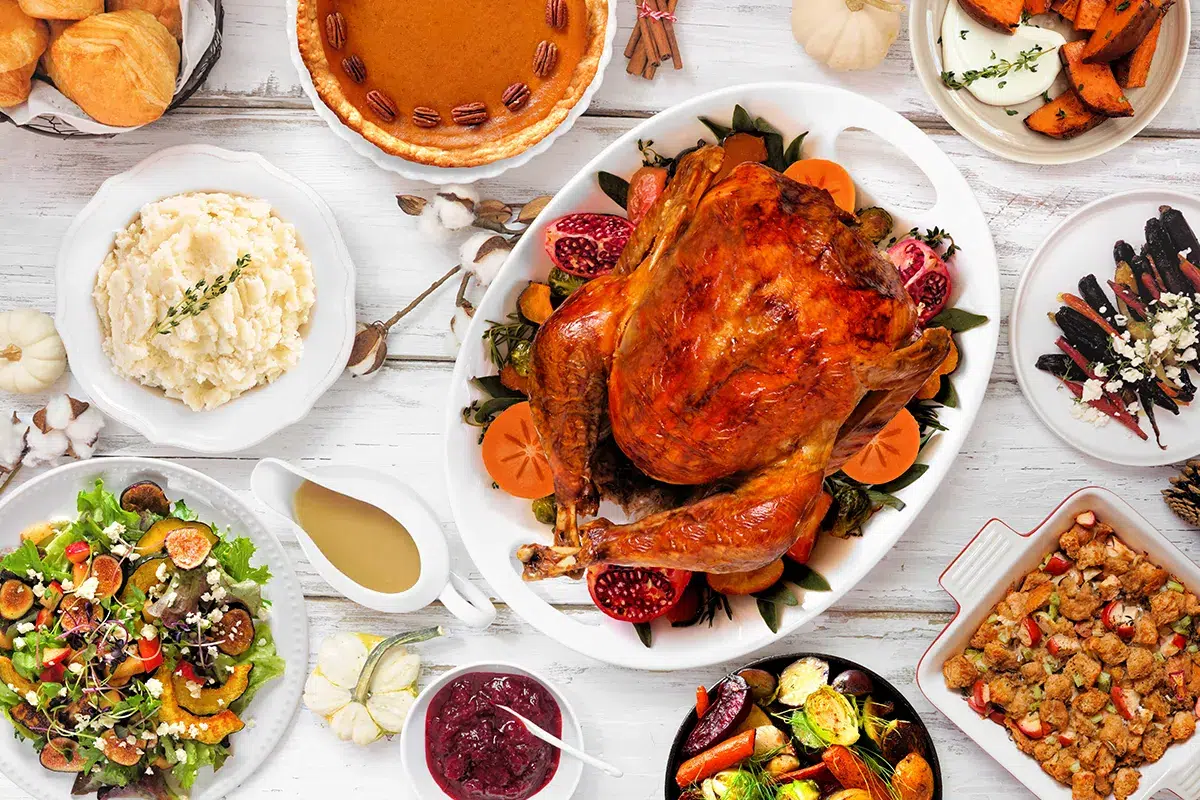
Key Takeaways for a Comfortable Thanksgiving on Semaglutide
- Turkey and roasted or steamed vegetables should make up most of your plate.
- Starches such as potatoes and stuffing are fine in portions that stay under a quarter of the plate.
- High-fat and sugary dishes are the ones most likely to trigger nausea or bloating.
- Eating slowly and stopping when comfortably satisfied matters more than any single food choice.
- Skipping your dose to eat more is not recommended and can set your progress back.
What Can You Eat on Semaglutide at Thanksgiving?
The framework I give patients is the same one used in obesity medicine generally. According to UNC Health, on a typical day half the plate should be nonstarchy vegetables, a quarter lean protein, and a quarter whole grains or starches. Thanksgiving tilts heavily toward starches and rich sides, so the goal is to keep that balance in mind rather than reproduce it exactly.
Roast Turkey
Turkey is the easiest decision on the table. It is a lean protein, which semaglutide patients tolerate well, and protein helps you feel satisfied with less. Favor the breast meat and go lightly on skin and gravy, both of which add fat that may slow digestion further.
Green Beans and Roasted Vegetables
Nonstarchy vegetables are the foods you can eat most freely. Roasted Brussels sprouts, carrots, and plain or lightly dressed green beans fit the half-plate target and add fiber that supports digestion. The exception is a casserole built on cream soup, cheese, or fried onions, which shifts a vegetable dish into the high-fat category. A small portion is fine; it simply should not stand in for your vegetables.
Sweet Potatoes and Mashed Potatoes
Both are starches, and both have a place on the plate in a modest portion. Plain roasted or mashed sweet potato is the lighter choice. Mashed potatoes made with heavy cream and butter, or a sweet potato casserole topped with marshmallows and brown sugar, combine fat and sugar in a way that may aggravate nausea. Take a few spoonfuls and keep the total starch on your plate to about a quarter.
Stuffing and Cranberry Sauce
Stuffing is a refined carbohydrate, often cooked with butter and sausage, which puts it among the foods most likely to feel heavy. Many patients find that a few bites are satisfying in a way a full serving no longer is. Cranberry sauce is mostly sugar, so a spoonful alongside the turkey is enough.
Pumpkin Pie and Other Desserts
Dessert does not have to be skipped. Sugary foods are among the more common triggers for GLP-1 side effects, so timing and portion are the levers. A break between dinner and dessert, ideally with a walk, gives your stomach time to empty before adding more. A small slice of pumpkin pie is a reasonable choice, and asking for a slice to take home is always an option.
Start Your Journey to Success, Don’t Wait Any Longer!
Join our satisfied clients who’ve experienced safe, effective treatments.
Which Thanksgiving Foods Can Worsen Semaglutide Side Effects?
The foods that cause trouble on semaglutide are, unfortunately, the ones Thanksgiving is built around. The mechanism is simple. Because the medication slows stomach emptying, foods that already digest slowly, mainly fats, stay in the stomach longer and may bring on nausea, reflux, or bloating.
According to the Cleveland Clinic, the foods most likely to set off GLP-1 side effects include sugary foods and drinks, refined carbohydrates, high-fat foods, and spicy dishes. On the holiday table, that translates to:
- Gravy, buttery mashed potatoes, and cream-based casseroles
- Fried turkey, turkey skin, and sausage stuffing
- Pecan pie, sweet potato casserole with marshmallows, and sugary cocktails
- Dinner rolls and other refined breads in large amounts
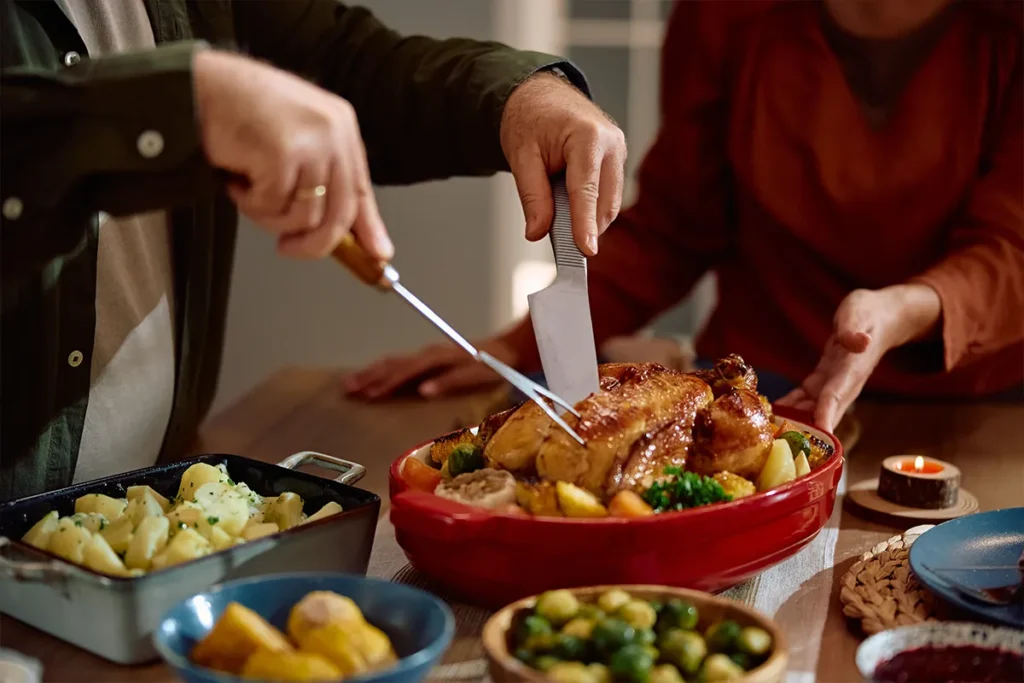
None of these need to be banned. Not every food on that list affects every patient, and part of the first few months on semaglutide is learning what your own body tolerates. A small portion of a favorite dish, eaten slowly, is usually manageable. Trouble tends to come from a plate loaded with several of them at once.
Alcohol deserves its own mention. GLP-1 medications can change both your appetite for and your tolerance of alcohol, and a drink may hit harder than you are used to. If you drink, sip slowly and alternate with water.
How Much Should You Eat at Thanksgiving?
Less than you used to, and that is the medication working as intended. Your stomach has a smaller effective capacity on semaglutide, and overfilling it is the most common reason patients feel sick after a holiday meal. The Cleveland Clinic notes that it can take the brain up to 30 minutes after eating to register fullness, so eating quickly means you may pass the comfortable point before you realize it.
A few practical habits help. Eat breakfast and a light lunch rather than saving up for dinner, since arriving very hungry makes it harder to eat moderately. Use a smaller plate or leave part of the dinner plate empty. Put your fork down between bites, and stop when you feel satisfied rather than full.
If you want seconds, make them vegetables or turkey. And if the meal goes further than you planned, return to your normal routine the next day. One large meal does not undo months of progress, provided it stays one meal.
Frequently Asked Questions About Food to Eat On Semaglutide
Personalized Semaglutide Care in Miami Beach, FL
Holiday meals are one of the moments when having a physician involved in your weight loss program matters. At BODYWELLE, I adjust dosing based on how you respond, provide nutrition guidance that fits your life, and remain available when a side effect needs attention. The plan is built around you, not a template.
If you are considering semaglutide or want support managing your current treatment through the holidays, call BODYWELLE at (305) 877-5084 or book a consultation online.