Quick answer: Procaine IV therapy is a physician-supervised infusion of a buffered, low-dose local anesthetic. Rather than numbing one area the way a dental injection does, it acts systemically and may influence pain signaling, sympathetic nervous system activity, and microcirculation. It may be considered for persistent muscle, joint, or nerve-related pain, and response varies from patient to patient.
Pain that has lasted longer than a few months behaves differently from pain after an injury. It often lingers after the tissue itself has healed, spreads beyond the original site, and arrives with stiffness, poor sleep, and a nervous system that never quite switches off. Patients ask me about Procaine IV because they have read that it works on those signaling patterns rather than on the sore spot itself. That description is fair, though it deserves more context than a short answer allows.
I am Dr. Alonso Martin, founder of BODYWELLE in Miami Beach, where I practice longevity, functional, and integrative medicine. My residency training was in family medicine, and I spent those years managing chronic pain, autoimmune conditions, and metabolic disease before building a practice around prevention and repair. That background shapes how I approach any pain therapy, including this one. I want to understand what is driving the pain before I consider what might modulate it.
What to Know Before Considering Procaine IV
- Procaine is a local anesthetic that, given as a buffered IV infusion, acts throughout the body instead of numbing a single area.
- The proposed effects involve pain signaling, sympathetic nervous system activity, and blood flow through the smallest vessels.
- Persistent muscle, joint, and nerve-related pain are the most common reasons patients ask about it.
- Most published research examines injected low-dose local anesthetics, and much of that research is observational.
- Whatever therapy you choose, the underlying cause of your pain still needs a proper evaluation.
What Is Procaine IV Therapy?
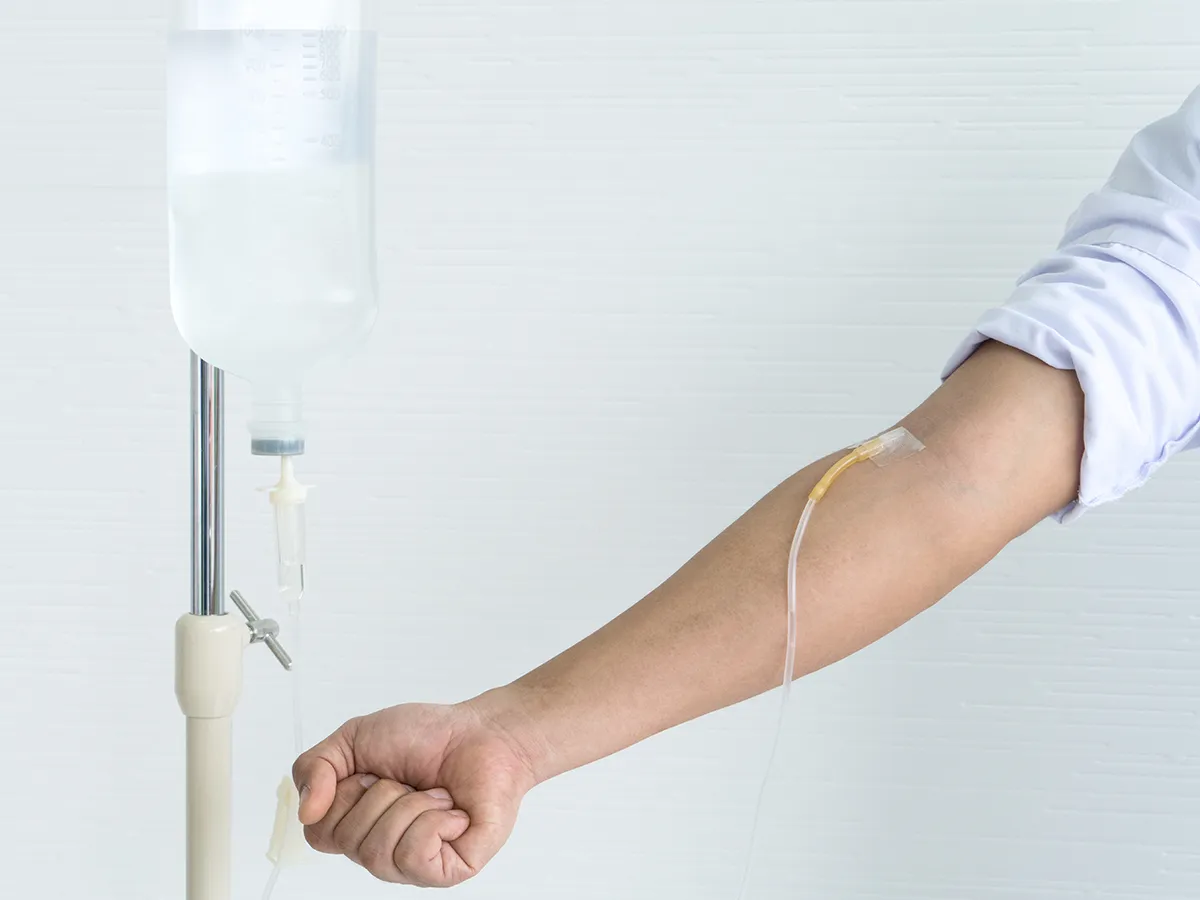
Procaine is the numbing medication many people know as Novocain, first developed in the early twentieth century for dental and minor surgical work. According to StatPearls, published on the National Library of Medicine’s NCBI Bookshelf, newer options such as lidocaine have largely taken its place for that purpose, though procaine is still used today.
The FDA prescribing information published on DailyMed approves procaine for injection into a specific area, either to numb the tissue directly or to block a nearby nerve. Giving it as a slow infusion into a vein falls outside that approval, which is common in medicine when a physician determines that an established medication may help a patient in a different way. It also means candidacy and monitoring matter more, not less.
At BODYWELLE, Procaine IV is given as a buffered infusion under medical supervision as part of our IV therapy offerings. Buffering means the solution is pH-adjusted before it is administered.
How May Procaine IV Affect Chronic Pain?
Nerves carry pain the way a wire carries current. Numbing medications work by briefly interrupting that current at the nerve itself, so the signal never reaches the brain. What makes procaine interesting when it travels through the bloodstream rather than sitting in one spot is which nerves it reaches first. It affects the nerves that regulate your stress response before the ones that carry sharp pain and touch.
That stress-response system, called the sympathetic nervous system, runs quietly in the background all the time. It tightens muscles, narrows blood vessels, and turns up the volume on pain signals. When it stays switched on for months, tension and pain start feeding each other in a loop that is hard to break from the outside.
The idea behind this therapy is that briefly quieting those nerves may give the loop a chance to settle, and that blood flow through the smallest vessels feeding sore tissue may improve as a result. There is real physiology behind that reasoning, though it is not a guarantee of relief.
What Types of Pain May Be Considered?
The patients who ask me about Procaine IV usually describe lingering muscle, joint, or nerve-related pain that has not resolved with the usual measures. Some have myofascial pain across the neck and shoulders. Some have joint discomfort that flares and settles without a clear pattern. Others describe stiffness and body-wide aching that tracks closely with long stretches of stress, poor sleep, and overwork.
That last group is worth naming, because sustained stress affects the same sympathetic pathways described above. It does not make the pain imaginary. It makes the nervous system part of the picture.
None of this replaces a diagnosis, and I evaluate what is driving the pain before discussing whether an infusion has a sensible role.
What Does the Research Say About Procaine IV?
A 2023 review in the Journal of Clinical Medicine gathered 129 studies on using low doses of numbing medications to treat pain rather than to numb. Chronic pain was the reason for treatment in roughly 73 percent of them, most often muscle pain and headache. Procaine appeared in 36 of those studies and had a comparatively low risk of toxicity, partly because the body clears it from the bloodstream quickly.
Two things temper that. Most of these studies simply tracked how patients did rather than comparing them against an untreated group, which makes the results suggestive rather than conclusive. The authors said plainly that larger, more rigorous trials are needed.
The second limitation is that nearly all of this research involves injections into specific muscles, nerves, or tissue, not infusions into a vein. However, the underlying idea is the same.
Start Your Journey to Success, Don’t Wait Any Longer!
Join our satisfied clients who’ve experienced safe, effective treatments.
Is Procaine IV an Alternative to Pain Medication?
No, and I would not want it framed that way. Procaine IV is not a substitute for prescribed pain management, and no one should stop or reduce a medication because of an infusion. If you take something for pain, that decision belongs to you and the physician who prescribed it.
Where an infusion may fit is alongside an existing plan, as one component among physical therapy, sleep and stress management, treatment of the underlying condition, and appropriate medication.
What to Expect From Procaine IV Therapy
Before the Infusion
Every Procaine IV at BODYWELLE begins with a consultation. I review your symptoms, how long the pain has lasted, what has already been tried, your full medical history, current medications, and any history of allergy to anesthetics or sulfites. Candidacy is determined at that visit rather than assumed. In some cases, I will recommend further workup before proceeding, or a different direction entirely.
During the Infusion
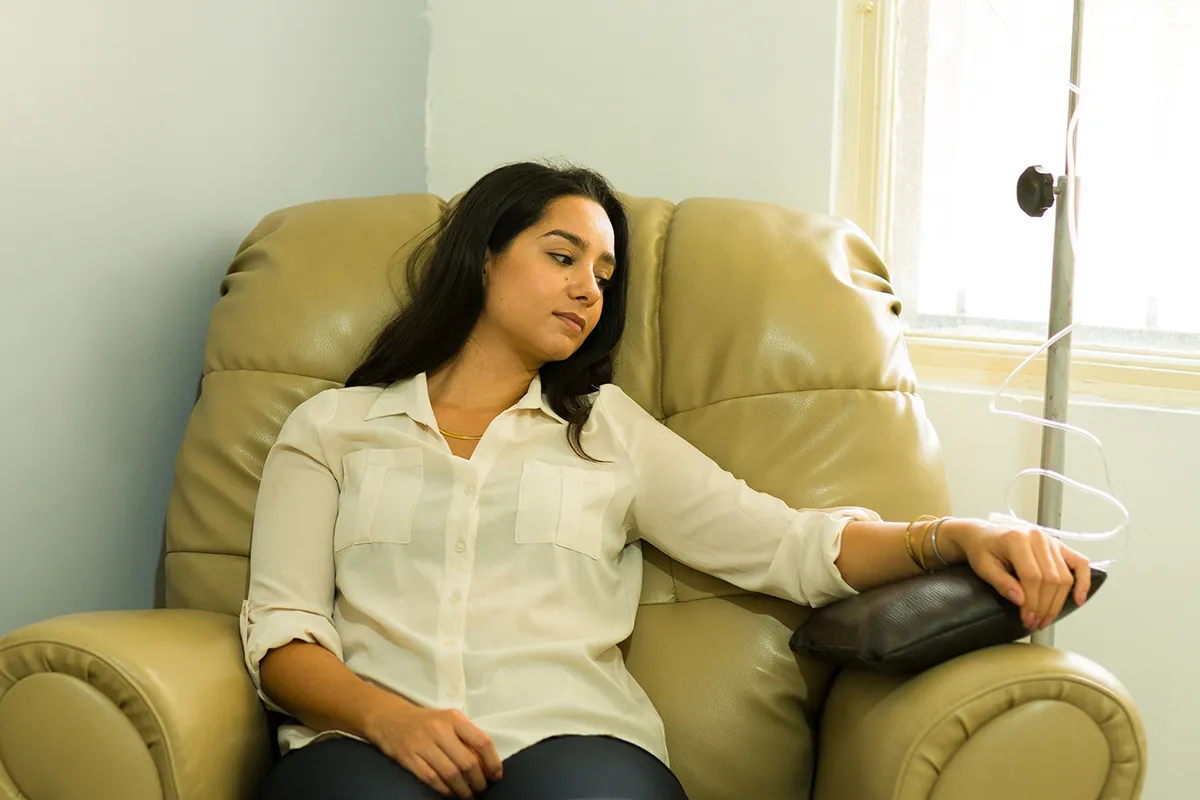
The infusion is given in-office while you are seated comfortably, and you are monitored throughout. IV sessions at our practice generally run 30 to 60 minutes. Most patients read or rest. Mild dizziness or nausea has been reported during therapeutic use of low-dose local anesthetics, and those effects were transient and self-limiting, which is part of why monitoring is standard. There is no downtime afterward, and patients typically return to normal activity the same day.

How Many Treatments Might Be Recommended?
Procaine IV is offered in a series of three or six, and the number depends on your response rather than a fixed protocol. I reassess after the early sessions. If nothing has shifted, continuing rarely makes sense. If there is a meaningful change, we discuss spacing and whether periodic maintenance is reasonable.
What Are the Risks and Side Effects?
Procaine’s adverse effects are largely dose-related. The prescribing information describes reactions involving the central nervous and cardiovascular systems at elevated blood levels, which is the reason dosing is conservative and monitoring is continuous. Allergic-type reactions are uncommon but possible, and the commercially available solutions contain a sulfite antioxidant that may trigger reactions in sulfite-sensitive people, more often in those with asthma. Procaine also breaks down into para-aminobenzoic acid, which can interfere with sulfonamide antibiotics.
Milder effects reported in the therapeutic literature include transient dizziness, nausea, numbness, and discomfort at the injection site, and these were generally self-limiting. Any needle-based procedure also carries the ordinary risks of bruising and irritation at the IV site.
Who May Not Be a Good Candidate for Procaine IV
Procaine is contraindicated in anyone with known hypersensitivity to procaine, to other ester-type anesthetics, or to para-aminobenzoic acid and its derivatives. Caution applies in several other situations:
- Significant cardiac rhythm disturbances, heart block, or low blood pressure
- Significant liver disease
- Sulfite sensitivity or asthma
- Advanced age or medical fragility
- Current treatment with sulfonamide antibiotics
Pregnancy calls for careful judgment, and I do not recommend it during pregnancy or breastfeeding outside of clear medical need. This is a list I go through carefully at consultation, because the safety of an infusion depends far more on patient selection than on the medication itself.
Tolerance matters just as much. A prescription that makes someone feel sick is a prescription they will stop taking, and a partially completed course does not fix a deficiency.
When Does Chronic Pain Need Further Evaluation?
Some pain warrants a workup before any elective therapy. Pain accompanied by unexplained weight loss, fever, night sweats, progressive weakness, numbness, loss of bladder or bowel control, or new pain following a fall or significant injury should be evaluated promptly rather than managed with wellness treatments. The same applies to pain that is worsening steadily rather than fluctuating.
If any of that describes your situation, see a physician for a diagnosis first. An infusion is not the right starting point.
Questions to Ask Before Trying Procaine IV
If you are considering this therapy, these are worth asking:
- How is it administered, and how long does a session take?
- How many sessions will I need?
- When can I expect to notice a difference?
- Will it interact with the medications I am already taking?
- What are my alternatives if this is not the right fit?
Procaine IV Therapy in Miami Beach, FL
At BODYWELLE, Procaine IV sits within a broader approach to pain that begins with understanding the cause. Every plan is physician-led and built around your history, your medications, and your goals rather than a fixed menu.
To find out whether Procaine IV therapy is appropriate for you, schedule a consultation at BODYWELLE in Miami Beach.