An erection is a vascular event. When the blood supply to erectile tissue weakens, erectile function weakens with it, and reduced blood flow is among the most common causes of ED. That is why two regenerative treatments have become central to non-invasive care: shockwave therapy and platelet-rich plasma, commonly called PRP. Each supports the vascular repair that erections depend on, and each does so by a different mechanism. Used together, they are intended to reinforce one another, both to restore erectile function and to support sexual performance in men who want to strengthen it.
Dr. Alonso Martin is a physician focused on longevity and functional medicine at BODYWELLE in Miami Beach. His approach to erectile dysfunction begins with identifying why erectile function has declined rather than addressing the symptom alone. That same reasoning determines whether shockwave therapy on its own or a combined approach with PRP suits a given patient.

The Essentials of PRP and Shockwave Therapy for ED
- Reduced blood flow to erectile tissue is among the most common causes of erectile dysfunction.
- Shockwave therapy uses acoustic energy to stimulate the growth of new blood vessels in that tissue.
- PRP concentrates platelets from your own blood to deliver growth factors, including VEGF, into the same tissue.
- The two treatments are combined because both act on the same vascular repair pathway.
- Research on the combination for erectile dysfunction has found it safe and well tolerated.
Why Erectile Dysfunction Responds to Regenerative Treatment
Erectile function depends on healthy arteries delivering a strong supply of blood to erectile tissue and on that tissue holding the blood it receives. As vessels narrow or stiffen with age, cardiovascular strain, or conditions like diabetes, the supply weakens, and erections become less firm and less reliable.
Medications such as Viagra and Cialis work within this limitation. They enhance the effect of the blood flow that remains, which is why they act for a period of hours and require a dose before each encounter. Regenerative treatments take the opposite approach. Rather than working around reduced blood flow, they are directed at rebuilding it, which is what makes them relevant both for treating ED and for men seeking to support erectile performance before dysfunction becomes established.
How Shockwave Therapy Restores Erectile Blood Flow
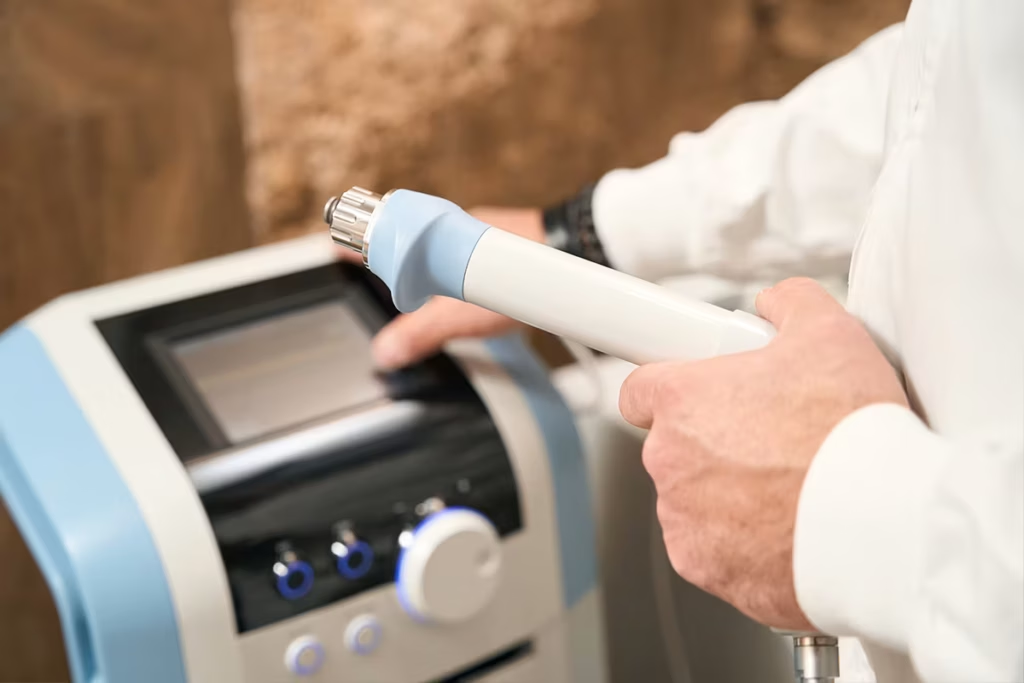
Shockwave therapy delivers focused acoustic energy into erectile tissue through a handheld applicator. The pressure waves are absorbed by cells in the treatment area, which respond by initiating a repair sequence. Mechanical force is converted into a biological signal, and that signal sets vascular repair in motion.
Several changes follow in the treated tissue. New blood vessels begin to form, a process called angiogenesis, improving the supply of oxygen and nutrients to erectile tissue. Microcirculation improves within existing vessels. Nitric oxide production increases, promoting the vasodilation that erections require. The tissue also recruits repair cells to the site, and fibrotic tissue may be reduced over the course of treatment.
Because the therapy rebuilds the vascular foundation rather than acting on symptoms, its benefits accumulate over a series of sessions and continue after treatment concludes.
What PRP Adds to Shockwave Therapy
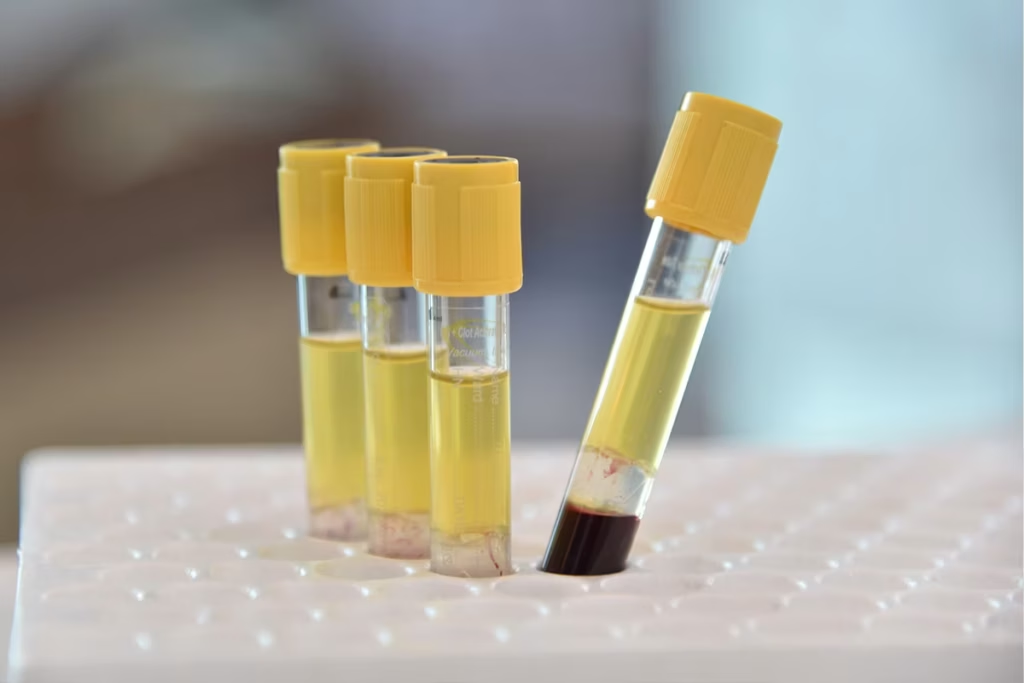
Preparing PRP starts with a routine blood draw. A centrifuge separates the sample into layers so the platelet-rich portion can be isolated, and that concentrated plasma is then injected into the treatment area.
Platelets are best known for clotting, but they also carry the growth factors the body uses to coordinate healing. The most relevant here is VEGF, vascular endothelial growth factor, the protein that tells the body to build new blood vessels. Shockwave therapy triggers that same building process mechanically. A platelet concentrate delivers a far denser supply of these signaling proteins to erectile tissue than the bloodstream supplies on its own, and because PRP originates from your own body, it introduces no foreign material.
The rationale for pairing the treatments follows directly. Shockwave therapy initiates the repair response and improves the vascular environment in which it takes place. PRP raises the concentration of the growth factors that carry the response forward. One initiates the signal. The other supplies the material the signal calls for. Both converge on angiogenesis, which is why the combination is intended to enhance results beyond what either treatment produces alone.
Sexual Performance Beyond Diagnosed ED
Not every man who considers these treatments has erectile dysfunction. Because both therapies act on the blood supply that erectile function depends on, some men pursue them to support firmness, responsiveness, and confidence as they age, before any diagnosis applies. The same vascular logic holds. Supporting the health of erectile tissue may help preserve the function that gradual vascular decline would otherwise erode.
Candidacy for this kind of proactive care, like candidacy for ED treatment itself, depends on individual evaluation. Erectile performance reflects vascular, hormonal, and psychological health together, which is why an assessment with Dr. Martin precedes any treatment plan.
Start Your Journey to Success, Don’t Wait Any Longer!
Join our satisfied clients who’ve experienced safe, effective treatments.
What the Research Shows
Shockwave therapy is the better-established of the two for erectile dysfunction, with clinical studies reporting meaningful improvement in erectile function for men whose ED is vascular in origin. The combination with PRP is newer. A phase 2 randomized trial found that pairing the two produced no adverse events over six months of follow-up, establishing that the approach is well tolerated. Whether the combination outperforms shockwave alone is the question larger trials are now examining, including a study in men with diabetes at the University of Miami.
The pairing itself is not experimental reasoning. In orthopedic and sports medicine, where the combination has been studied longest, patients with knee osteoarthritis and chronic tendon conditions treated with both therapies have reported better pain and function outcomes than those treated with either alone. Erectile tissue care applies the same mechanism to a different tissue with the same need: restored blood supply.
How Dr. Martin Approaches Combination Therapy
Combination therapy is not automatically preferable to shockwave therapy alone. Shockwave treatment is non-invasive and requires no needles or medication, and for many men a shockwave series by itself produces the intended result. Adding PRP brings an injection into an otherwise needle-free course, so Dr. Martin offers it as an option within a plan rather than including it by default.
Sequencing varies as well. Some men complete a shockwave course first and evaluate PRP once the tissue response is clear. Others begin with both. The appropriate approach depends on the severity of the ED, its underlying cause, the state of your vascular health, and the tissue response over the first several weeks. This is why evaluation precedes treatment.
Restoring Function, Supporting Performance
Shockwave therapy and PRP act on the process that most erectile dysfunction comes down to, which is the health of the blood supply to erectile tissue. One rebuilds it mechanically, the other reinforces it biochemically, and together they are intended to accomplish more than either accomplishes alone. For men treating ED and for men looking to support sexual performance as they age, the starting point is the same: understanding the cause. Contact BODYWELLE in Miami Beach to schedule a consultation with Dr. Martin.